Vagus Nerve Stimulation Devices: How New Technologies Are Transforming Stress Management
Stress: a growing global health challenge
Stress has become one of the most significant health challenges of modern societies. Chronic stress is associated with sleep disorders, cardiovascular disease, anxiety and metabolic dysfunction.
Beyond its health impact, stress also carries a major economic burden. Workplace stress and burnout cost global economies hundreds of billions of dollars each year through reduced productivity, absenteeism and healthcare expenses.
As awareness around mental well-being grows, individuals and organizations are increasingly looking for non-pharmaceutical approaches to stress regulation. This demand has fueled the development of a new category of technologies focused on nervous system regulation.
Among these innovations, vagus nerve stimulation devices are attracting growing attention.
Understanding the role of the vagus nerve
The vagus nerve is the longest cranial nerve in the human body and plays a central role in the autonomic nervous system.
It connects the brain to multiple organs including the heart, lungs and digestive system.
Its primary function is to regulate the balance between two major physiological states:
- the sympathetic nervous system, responsible for the "fight or flight" response
- the parasympathetic nervous system, associated with relaxation and recovery
When the parasympathetic system is activated, the body can slow heart rate, improve digestion and support recovery from stress.
Because of this regulatory role, the vagus nerve has become an important focus of research in neuroscience and preventive health.
What is vagus nerve stimulation?
Vagus nerve stimulation (VNS) refers to techniques designed to activate the vagus nerve using electrical signals.
Historically, vagus nerve stimulation was mainly used in clinical medicine for neurological conditions such as epilepsy or treatment-resistant depression.
These treatments relied on surgically implanted devices that deliver electrical stimulation directly to the nerve.
In recent years, technological progress has enabled the development of non-invasive vagus nerve stimulation devices.
These devices deliver controlled electrical impulses through the skin to influence vagal pathways and support nervous system regulation.
This approach is often referred to as transcutaneous vagus nerve stimulation (tVNS).
The emergence of non-invasive vagus nerve stimulation devices
Recent innovations have made it possible to develop wearable devices designed to stimulate the vagus nerve through the skin.
These technologies typically use electrodes placed around the neck or ear, where branches of the vagus nerve can be accessed.
By delivering gentle electrical pulses, these devices aim to activate the parasympathetic nervous system and support relaxation responses.
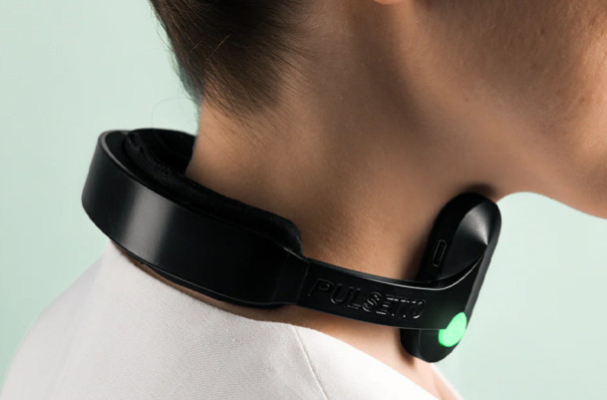
One example of this emerging category is the Pulsetto FIT wearable vagus nerve stimulation device.
Professionals can explore the device here
Potential applications for stress management
Interest in vagus nerve stimulation technologies is largely driven by their potential role in stress management and nervous system regulation.
Early studies suggest that vagus nerve stimulation may influence several physiological mechanisms related to stress and recovery.
Potential areas of interest include:
- stress regulation
- sleep improvement
- nervous system recovery
- modulation of inflammatory responses
The physiological mechanism behind these effects is linked to activation of the parasympathetic nervous system, which helps counterbalance the body's stress response.
However, research into consumer neurostimulation devices is still evolving and further studies are required to better understand long-term effects and optimal usage protocols.
Vagus nerve stimulation market: industry trends and growth potential
Interest in vagus nerve stimulation technologies has increased significantly over the past decade as research into the autonomic nervous system and bioelectronic medicine continues to expand.
The development of non-invasive stimulation technologies has opened new possibilities for applications in stress management and preventive health.
This trend is closely connected to the broader growth of the stress management technology market.
Several structural factors are driving this expansion:
- growing awareness of burnout and mental health challenges
- increasing demand for non-pharmaceutical wellness solutions
- rapid growth of wearable health technologies
- integration of neuroscience into consumer health innovation
As individuals increasingly prioritize mental well-being and resilience, technologies capable of regulating physiological stress responses are gaining attention from both consumers and professionals.
Why professionals are increasingly interested in vagus nerve stimulation devices
Beyond consumer wellness, vagus nerve stimulation technologies are also attracting interest from professionals operating in preventive health and wellness sectors.
Several types of professionals are exploring these technologies, including:
- wellness clinics
- longevity centers
- recovery and performance facilities
- sleep clinics
- spas and biohacking labs
Chronic stress and sleep disorders are among the most common concerns reported by clients in wellness environments.
Professionals are therefore looking for tools that can complement existing stress management approaches.
Non-invasive vagus nerve stimulation devices represent a new category of technologies that may support nervous system regulation and recovery.
FAQ
What is vagus nerve stimulation?
Vagus nerve stimulation is a technique that uses electrical signals to activate the vagus nerve, which regulates several important physiological processes including heart rate, digestion and stress response.
Originally developed for medical treatments, this technology is now also being explored through non-invasive wearable devices.
Can vagus nerve stimulation help reduce stress?
Stimulating the vagus nerve may help activate the parasympathetic nervous system, which promotes relaxation and recovery.
This physiological response can help counterbalance the body's stress reaction.
However, research on consumer devices is still evolving and results may vary between individuals.
What are non-invasive vagus nerve stimulation devices?
Non-invasive vagus nerve stimulation devices are wearable technologies designed to stimulate the vagus nerve through the skin without requiring surgery.
They typically deliver mild electrical impulses through electrodes placed on the neck or ear.
How does the Pulsetto vagus nerve stimulation device work?
The Pulsetto device is worn around the neck and delivers controlled electrical pulses designed to stimulate the vagus nerve.
The stimulation sessions are generally guided through a mobile application that helps users follow structured relaxation protocols.