

Glycan test or telomere test: which biological age test should you choose?
Chronological age does not always reflect the true condition of your body. Two people of the same age can have very different levels of health, energy, and biological aging.
This is why modern science focuses on biological age, which measures the actual aging of your body using specific biomarkers, particularly glycans and telomeres.
These biomarkers assess different aspects of aging, whether functional or cellular. They provide a scientific and objective way to better understand your body and adopt a personalized strategy to support your health and longevity.
On IZY.LIFE Pro, these analyses are offered by specialized laboratories such as GlycanAge, Life Length, and LifeLab, selected for their expertise in longevity and preventive biology.
Why measure your biological age?
Measuring biological age provides deeper insight into your health than chronological age alone.
These tests help to:
- understand the real impact of your lifestyle on your body
- identify accelerated or slower biological aging
- monitor the effects of changes in nutrition, sleep, or physical activity
- adopt a proactive, prevention-focused approach
- optimize your health, energy, and longevity
They enable a data-driven and personalized approach to health optimization.
Glycan test: measuring your functional biological age
Glycans are structures attached to your antibodies, particularly immunoglobulin G (IgG), and play a key role in regulating your immune system.
These structures change with age and directly reflect the physiological state of your body, particularly in relation to inflammation and biological aging.
Glycans are strongly influenced by lifestyle factors, including
- physical activity
- nutrition
- sleep quality
- stress levels
- inflammatory status
They are now considered one of the most accurate biomarkers for measuring functional biological age.
Measuring your glycans allows you to:
- understand the impact of your lifestyle on your body
- assess your physiological and immune health
- track your progress over time
- optimize your longevity strategy
Unlike structural biomarkers, glycans can change relatively quickly in response to positive lifestyle changes, making them highly actionable.
On IZY.LIFE Pro, these analyses are provided by specialized laboratories such as GlycanAge, internationally recognized for their expertise in glycan-based biological age testing.
Discover GlycanAge tests: Glycanage
Telomere test: measuring cellular aging
Telomeres are protective structures located at the ends of your DNA. Their role is to protect your genetic material during cell division.
Over time, telomeres naturally shorten. This shortening is associated with cellular aging and reduced regenerative capacity.
Certain factors can accelerate telomere shortening, including:
- chronic stress
- poor sleep
- inflammation
- lack of physical activity
- environmental factors
Telomere length is widely recognized as a key biomarker of cellular aging.
Measuring your telomeres allows you to:
- assess the biological aging of your cells
- understand your biological aging baseline
- obtain a structural measure of aging
- monitor long-term cellular aging
Unlike glycans, telomeres change slowly and provide a stable, long-term indicator of biological aging.
On IZY.LIFE Pro, these analyses are provided by specialized laboratories such as Life Length, known for advanced telomere measurement technologies used in preventive health and research.
Discover telomere tests: Life Length
Complement your analysis with advanced biomarkers
In addition to glycans and telomeres, other biomarkers can provide a more comprehensive understanding of your health and biological aging.
These analyses help to:
- better understand your overall physiological condition
- identify potential biological imbalances
- complement biological age testing
- refine personalized prevention strategies
These complementary biomarkers enable a more complete and individualized health assessment.
On IZY.LIFE Pro, these analyses are provided by specialized laboratories such as LifeLab.
Discover available tests: Lifelab1
Glycans vs telomeres: what is the difference?
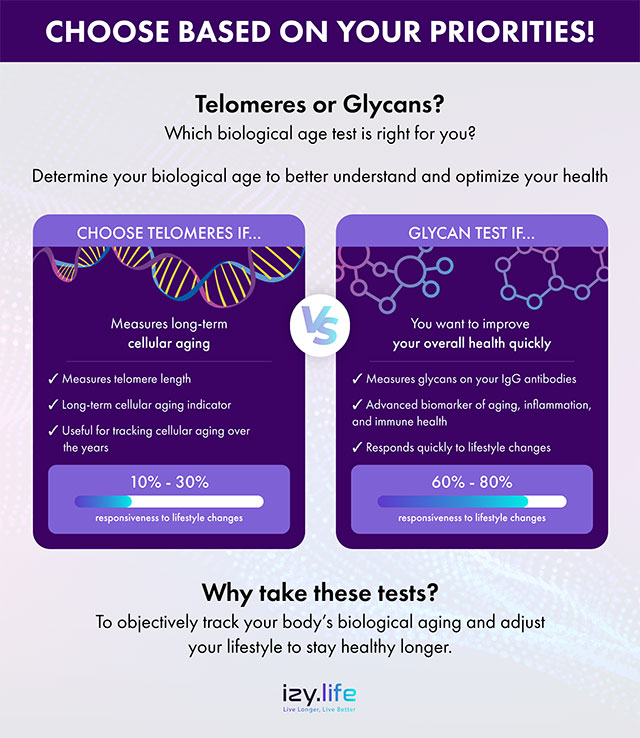
Glycans measure functional biological aging, reflecting your current physiological condition and lifestyle impact.
Telomeres measure structural cellular aging, providing a more stable and long-term indicator of biological aging.
Glycans are particularly useful for tracking progress and optimizing health, while telomeres help assess your biological aging baseline.
These biomarkers are complementary and together provide a comprehensive understanding of biological aging.
Which test should you choose?
The glycan test is particularly recommended if you want to:
- monitor the impact of your lifestyle
- actively improve your health
- obtain actionable biological data
The telomere test is particularly useful if you want to:
- understand your cellular aging
- obtain a long-term structural aging indicator
Combining these tests provides a more complete and personalized assessment.
IZY.LIFE Pro: longevity technologies for professionals
IZY.LIFE Pro selects leading laboratories to provide scientifically validated longevity testing solutions.
These tools allow professionals to better understand, monitor, and optimize biological health using advanced biomarker analysis.
FAQ — Biological age testing: glycans and telomeres
What is biological age?
Biological age reflects the actual condition of your body, rather than the number of years you have lived. It is influenced by lifestyle, health, and environmental factors.
What is the difference between glycans and telomeres?
Glycans measure functional biological aging and respond to lifestyle changes. Telomeres measure structural cellular aging and provide a long-term indicator.
Which test is better for improving health?
Glycan testing is particularly useful for monitoring progress and optimizing lifestyle interventions.
Are telomere tests useful?
Yes, they provide valuable insight into cellular aging and long-term biological health.
Are glycan and telomere tests complementary?
Yes, they measure different aspects of aging and together provide a more complete assessment.
Who are these tests for?
These tests are designed for healthcare professionals, longevity clinics, and individuals interested in understanding and optimizing their health.
Why offer biological age testing to clients?
These tests provide objective biological data and support personalized health and longevity strategies.